Why Edibles Aren’t “Just Food” in Thailand’s Legal Kitchen
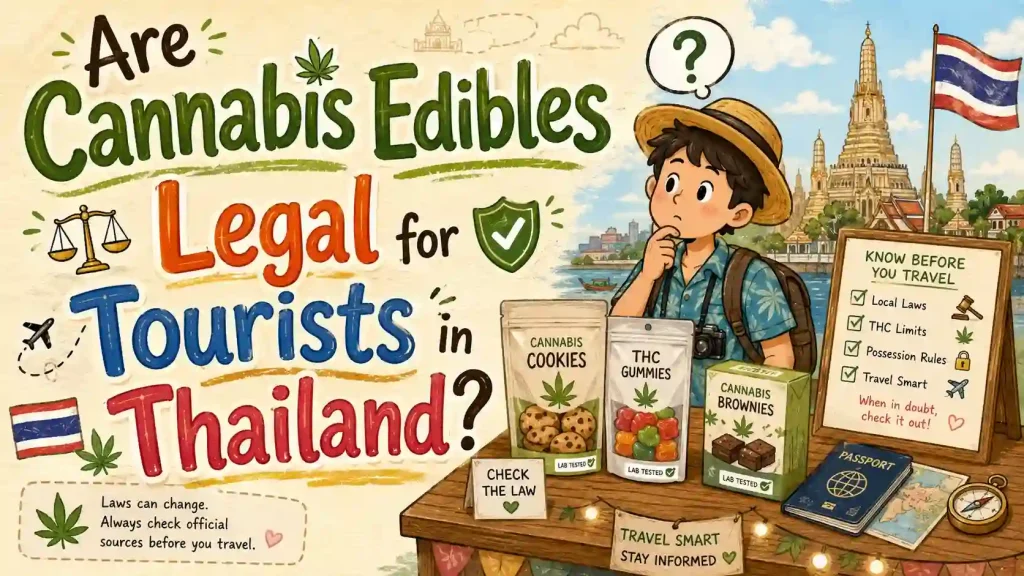
Cannabis edibles occupy a unique legal category that prevents tourists from treating them as ordinary snacks or health foods. The 2025 regulatory framework created a sharp distinction between raw cannabis flowers, which fall under “controlled herb” classification, and processed edibles, which the Thai Food and Drug Administration regulates as controlled substances disguised as consumer goods. Raw buds face strict cultivation and distribution controls under narcotics legislation, while brownies, gummies, and infused beverages navigate food safety laws that nonetheless prohibit over-the-counter sales to unlicensed individuals. This dual-track system means edible manufacturers must comply with pharmaceutical-grade production standards despite marketing their products in familiar food packaging.
Retail access to cannabis cookies requires valid medical prescriptions following the June 2025 reclassification that removed these products from café shelves and convenience stores. Establishments displaying edibles within reach of general consumers operate outside legal boundaries, regardless of whether packaging resembles ordinary supermarket snacks. Each transaction constitutes a pharmaceutical dispensing event requiring verified Thai medical documentation that short-term visitors typically cannot secure.
Police examinations of ingredient lists trigger controlled substance protocols rather than food safety inspections when officers detect THC concentrations. Jurisdiction shifts immediately from health inspectors to narcotics investigators, transforming innocent possession into pharmaceutical violations. Consequences range from administrative fines to potential imprisonment depending on quantity and location of seizure, with airport checkpoints carrying the highest escalation risks.
THC Limits and Labeling: Reading Between the Green Lines
Thailand enforces strict THC concentration caps that render recreational-strength edibles legally extinct while mandating comprehensive labeling that immediately identifies products as prescription-only pharmaceuticals. Medical-grade edibles face stringent THC limitations, typically restricting active concentrations to levels far below recreational standards found in North American or European markets. Products exceeding these thresholds cannot secure FDA approval for legal distribution, effectively eliminating high-potency brownies or infused chocolates from legitimate supply chains. Manufacturers must formulate items meeting pharmaceutical rather than recreational dosing standards, creating a product landscape where potent edibles exist solely in black markets.
Packaging requirements mandate disclosure of active cannabinoid content, batch tracking numbers, and prominent medical warnings that instantly distinguish legal products from contraband. These markings function as legal identifiers, alerting enforcement agents that bearers possess prescription-only medication rather than conventional food items. Tourists carrying edibles lacking these specific markings face immediate confiscation, while possession of properly labeled products without matching prescriptions constitutes unauthorized possession of controlled pharmaceuticals.
QR codes on packaging link to laboratory testing results and production certifications, but this transparency serves to verify pharmacy inventory rather than facilitate tourist purchases. Digital footprints confirm products originated from licensed medical facilities and remain locked behind pharmacy counters. Scannable batch codes provide law enforcement with instantaneous verification of prescription status, eliminating ambiguity during roadside or airport inspections.
Border Wars: Why Your Suitcase Isn’t a Dispensary
International travelers face severe complications when attempting to import, export, or transport cannabis edibles across Thai borders, regardless of the product’s legal status in their home countries. Customs declarations of foreign-purchased edibles trigger automatic seizures and potential drug trafficking investigations, irrespective of home-country prescriptions or medical necessity. Thailand prohibits importing any cannabis-derived products without pre-approved FDA import licenses, a documentation burden individual tourists cannot satisfy. Border agents classify these items as unlicensed pharmaceuticals rather than personal health products, initiating procedures that may result in detention, fines, or criminal charges depending on quantities involved.
Departure from Thailand with leftover medical edibles transforms travelers into accidental drug smugglers under the laws of destination countries like Singapore, Japan, or Australia. These jurisdictions maintain zero-tolerance policies that do not recognize Thai medical prescriptions, treating any cannabis product as contraband punishable by severe penalties. Legal protection afforded by Thai documentation evaporates upon entering airspace controlled by nations with stricter narcotics policies.
Absence of Thai-issued medical certificates at airports transforms personal possession into potential distribution charges in the eyes of border agents scanning luggage. Immigration officials interpret unidentified edible substances as trafficking materials, particularly when quantities exceed minimal amounts or packaging suggests commercial rather than individual consumption. Without locally recognized prescriptions specifically naming the bearer and product, tourists face maximum charges that could include imprisonment terms measured in years rather than days.
FAQ
Can tourists legally buy cannabis edibles at Bangkok cafes or convenience stores?
No. Following the June 2025 regulatory tightening, all THC-containing edibles require a valid prescription from a Thai physician. Any establishment selling them to tourists without medical verification is operating outside the law, regardless of how the products are marketed or displayed.
What are the penalties for possessing cannabis edibles without a prescription in Thailand?
Possession of cannabis edibles without valid Thai medical documentation can result in charges ranging from illegal possession of a controlled substance to drug trafficking, depending on quantity. Penalties may include substantial fines and imprisonment, with severity increasing significantly at airport checkpoints.
Can I bring my prescription CBD edibles from the US or Canada into Thailand?
No. Thailand prohibits importing any cannabis-derived products—including CBD-only edibles—without pre-approved import licenses from the Thai Food and Drug Administration. This restriction applies regardless of the product’s legality in your home country or whether you hold a foreign medical prescription.