Why Your Brain Becomes a Potato Behind the Wheel
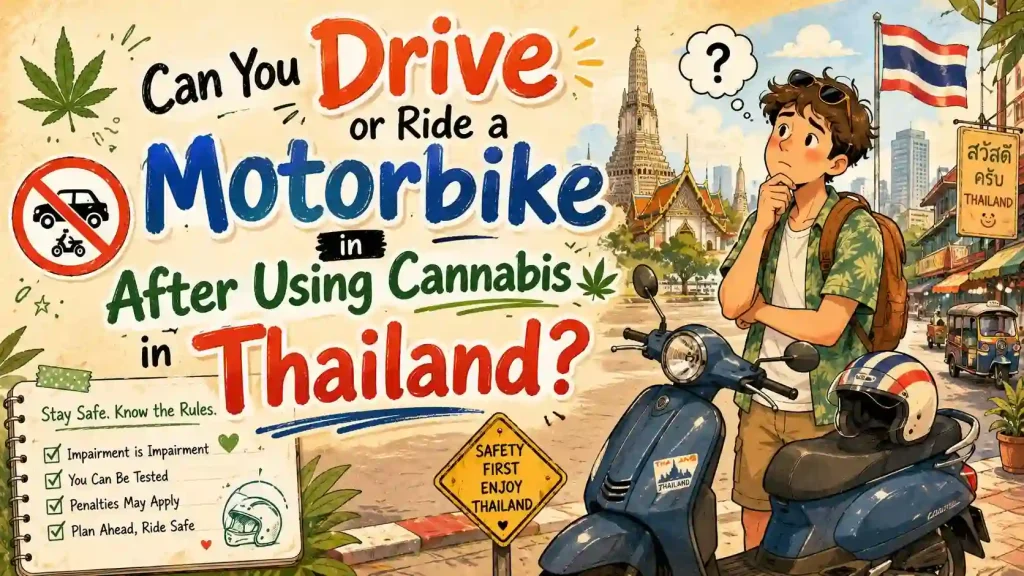
Cannabis consumption fundamentally compromises the neural functions required for safe vehicle operation. Tetrahydrocannabinol (THC) slows neural transmission speeds, transforming routine driving decisions into dangerously delayed reactions. When a stray dog crosses the road or a tuk-tuk executes an illegal U-turn, your brain registers the threat significantly slower than sober processing allows, while your feet respond to brake and accelerator pedals as if moving through thick quicksand. This physiological delay creates an unavoidable collision window that no amount of driving experience or familiarity with Thai roads can overcome.
Depth perception and risk assessment deteriorate rapidly under cannabis influence. Your ability to judge following distances becomes as unreliable as speculative fortune-telling, leading to dangerous tailgating and catastrophic lane-change decisions during high-speed highway travel. The drug disrupts your brain’s spatial processing centers, making it impossible to accurately calculate the speed of oncoming traffic or the narrowness of gaps between vehicles in dense Bangkok traffic.
Cannabis generates a dangerous illusion of competence that proves particularly lethal behind the wheel. Users frequently believe they are driving with racing-driver precision and heightened focus when they are actually piloting a multi-ton liability with the spatial awareness of a disoriented goldfish. This false confidence prevents critical self-correction and masks the very impairment that threatens your life and the lives of pedestrians, motorcyclists, and other drivers sharing the roadway.
When Your Insurance Becomes an Expensive Piece of Paper
Your medical cannabis prescription provides no legal protection against traffic violation charges. Flashing your legal documentation to a traffic officer following a fender-bender will not prevent charges of reckless driving or criminal negligence under Thai law. Authorities view impairment as impairment regardless of the substance’s legal status for medical use, meaning you face the same potential penalties as recreational users who operate vehicles while intoxicated.
Thai insurers treat cannabis impairment identically to drunk driving when processing accident claims. If blood tests reveal THC influence at the time of collision, your insurance policy effectively evaporates, leaving you personally responsible for all hospital bills, vehicle repairs, and property damages. This financial exposure can reach hundreds of thousands of THB depending on accident severity, transforming a minor traffic incident into a life-altering economic catastrophe.
Causing injury while operating a vehicle under cannabis influence triggers severe criminal liability under Thailand’s penal code sections regarding negligence. Depending on actual circumstances and injury severity, prosecutors may upgrade a simple traffic ticket to criminal charges carrying potential prison sentences. This liability applies universally whether you possess a medical cannabis card or purchased products from licensed dispensaries, creating no exemptions for documented patients.
The ‘Waiting Game’ Myth
THC metabolism follows no predictable timeline that guarantees safe driving capability. Unlike alcohol, which burns off at roughly one standard drink per hour, cannabis stores in fat cells and releases unpredictably into your bloodstream. There is no wait-two-hours-and-drive formula that ensures sobriety, as individual metabolic rates, body composition, and consumption methods create wildly varying impairment windows that no chart can accurately predict.
Residual cannabis effects persist long after subjective feelings of intoxication fade. Even when you feel completely sober, THC continues impairing judgment, coordination, and reaction time for 24hours or more following consumption. This invisible hangover makes morning-after driving equally dangerous and legally perilous, as blood tests will still reveal active compounds that prosecutors can use to establish impairment regardless of how clear-headed you feel.
The only safe and legally defensible blood THC level for drivers is absolute zero. If cannabis has entered your system within the past 24hours, your sole responsible option involves surrendering your keys to a sober individual. This standard applies universally across all vehicle types and consumption purposes, permitting no mathematical exceptions or personal assessments of functionality.
FAQ
Is there a legal THC blood limit for driving in Thailand like alcohol?
No. Unlike alcohol’s clear 0.05% limit, Thailand currently has no established roadside THC threshold for drivers. Any impairment detected by police through behavioral tests, blood draws, or accident reconstruction can result in charges, making the legal standard subjective and strictly enforced.
Is riding a motorbike safer than driving a car after using cannabis?
Riding a motorbike after cannabis use is exponentially more dangerous than operating a car. Motorbikes require constant micro-adjustments, balance, and rapid weight shifts—functions cannabis specifically disrupts. With zero protection and higher vulnerability to road conditions, impaired scooter riding essentially turns you into a high-speed projectile navigating through dense urban traffic.
What should I do if I need to travel after using medical cannabis?
Treat cannabis consumption exactly like alcohol consumption when planning transportation. Use Grab, Bolt, taxis, or hotel shuttles instead of driving yourself. Licensed delivery services operating in Bangkok and Pattaya can reach you within 30minutes, meaning you should never need to drive to obtain your medicine or drive after using it—plan your transportation before you consume.