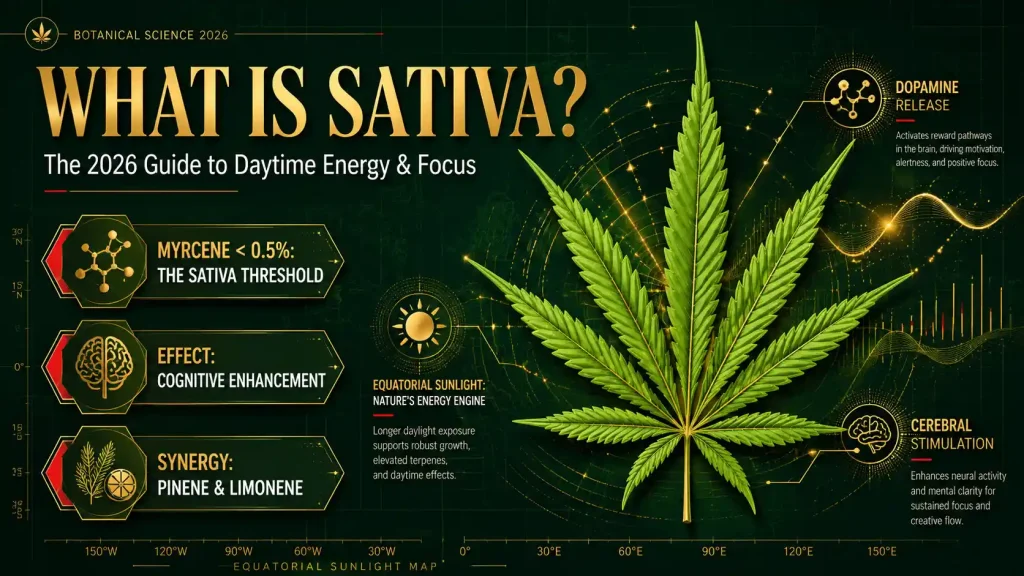
Sativa is both a botanical term and a modern cannabis menu label. It is commonly associated with tall, narrow-leafed plant traits and an energising effect, but the label alone does not prove a product’s chemistry, potency or medical suitability. For the wider category framework, read our guide to the different types of weed in Thailand.
What does sativa mean?
In cannabis language, sativa can refer to Cannabis sativa as a botanical classification, or to a commercial label used to describe a product’s perceived lineage. The word itself comes from a Latin term associated with cultivated plants. In everyday menus, however, “sativa” is not a single, globally standardised chemical category.
That distinction matters because readers often move between three different meanings without noticing: a plant description, a breeding or lineage label, and a prediction about how a product may feel. Those meanings overlap in marketing language, but they are not interchangeable. A sativa label does not automatically identify a particular THC level, terpene profile or medical indication.
What plant traits are associated with Cannabis sativa?
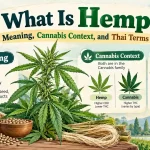
Botanical and educational descriptions commonly associate sativa-type plants with taller, more slender growth and narrower leaves than the traditional indica description. KHIRON Europe describes sativa as a tall plant with narrow leaves and notes that these are botanical distinctions rather than a reliable effect formula. The Cannabis sativa reference page likewise describes a cultivated flowering plant and discusses variation in morphology, chemical constituents and uses.
These are high-level descriptive traits, not a practical cultivation guide and not a test that can identify a product’s effects. Modern breeding has moved genetic material across traditional categories, and the appearance of a plant or flower cannot substitute for current product information. A person looking at a menu photo is not looking at a laboratory result.
Does sativa mean energising?
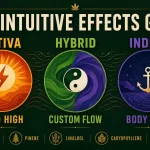
“Energising,” “uplifting,” “creative” and “daytime” are common words associated with sativa. They are best treated as reported shorthand or marketing language, not as guaranteed outcomes. KHIRON’s explainer explicitly describes the familiar “indica makes tired, sativa makes awake” scheme as an outdated stereotype and states that cannabinoids, terpenes and individual perception all matter.
Individual response can also differ substantially. Product composition, prior exposure, health context, other medicines, setting and sensitivity can change the experience. Even if a product is marketed as activating, cannabis can still impair reaction time, attention, memory or coordination. A label that sounds functional is not a safety clearance, and it should not be used to justify driving or other hazardous activity.
Sativa, hybrids and chemotype
Many modern products have mixed or complex lineages. A menu may describe a product as sativa-dominant, indica-dominant or hybrid, but these categories do not specify the exact genetic history or chemical composition. Two products with the same name can differ because of producer, genetics, growing conditions, processing, storage and batch.
The more useful scientific language is often chemotype: a description based on the cannabinoids and other compounds present. A 2022 study of commercial Cannabis samples from six US states found that widely used commercial labels did not consistently align with the observed chemical diversity, although some labels showed biased associations with particular chemotypes. The study is useful for understanding label limits, but it is not a survey of Thai products.
This is also why “sativa” should not be treated as a potency scale. A sativa label does not prove that a product is stronger than an indica or hybrid label. THC, CBD, other cannabinoids, terpenes and the specific batch are more concrete information categories, while still not guaranteeing an individual outcome.
How to read a sativa label without overclaiming
Use the matrix below to separate a useful description from an unsupported promise.
| Claim or label you may see | What it may describe | What it does not prove |
|---|---|---|
| “Sativa” | A traditional lineage reference or a seller’s category label | A guaranteed energising effect, THC level or medical benefit |
| Tall plant or narrow leaves | A commonly described botanical trait | The chemistry or effect of a finished product |
| “Sativa-dominant” | A marketing description of lineage or breeding direction | A standard percentage of genetics or a predictable experience |
| “High THC sativa” | A stated cannabinoid characteristic if supported by current testing | That every batch with the same name has the same strength |
| Fruity, citrus or pine aroma | A sensory or terpene description | A treatment outcome or reliable mood prediction |
| “Good for focus” or “daytime use” | A user report or marketing claim | Medical suitability, safe driving or a clinically established indication |
When a claim matters, look for the underlying product information and the source behind it. Research on commercial labels can identify broad problems with category language, but it cannot convert a shop description into a Thai prescription or a personal medical recommendation.
What sativa means in Thailand’s medical context
In Thailand, “sativa” is not a diagnosis, prescription, indication or legal permission. The Thai Department of Thai Traditional and Alternative Medicine describes controlled cannabis flower as part of a medical-service framework involving permitted establishments, qualified professionals, a PT33 controlled-herb prescription and record requirements. That process is separate from a product menu’s category label.
The Department of Medical Services’ Guidance on Cannabis for Medical Use also places medical decisions within evidence-based assessment, product composition, risks and monitoring. It does not make “sativa” a treatment category. This article therefore does not tell you which product to use, what dose to take or how to treat a condition. For an individual medical question, use a qualified professional and check the current Thai rules.
FAQ
What is sativa?
Sativa is a botanical term linked to Cannabis sativa and a commercial label used for some cannabis products. In modern menus, it is shorthand rather than a complete chemical or medical description.
Is sativa always energising?
No. Energising or uplifting language is common, but chemistry, context and individual response can produce a different experience. The label is not a guarantee.
What does a sativa label tell you?
It may indicate how a seller describes lineage or category. It does not, by itself, establish potency, cannabinoid ratios, terpene content, safety or medical suitability.
Is sativa stronger than indica?
No. Sativa and indica labels are not a strength scale. Potency depends on the product’s measured composition and batch, and the label alone cannot settle it.
Does sativa have a medical meaning in Thailand?
No. A sativa label is not a Thai prescription or medical indication. Medical cannabis decisions follow the applicable professional and regulatory process.