Inside the Hotel’s Toolbox: Contractual Consequences, Not Criminal Courts
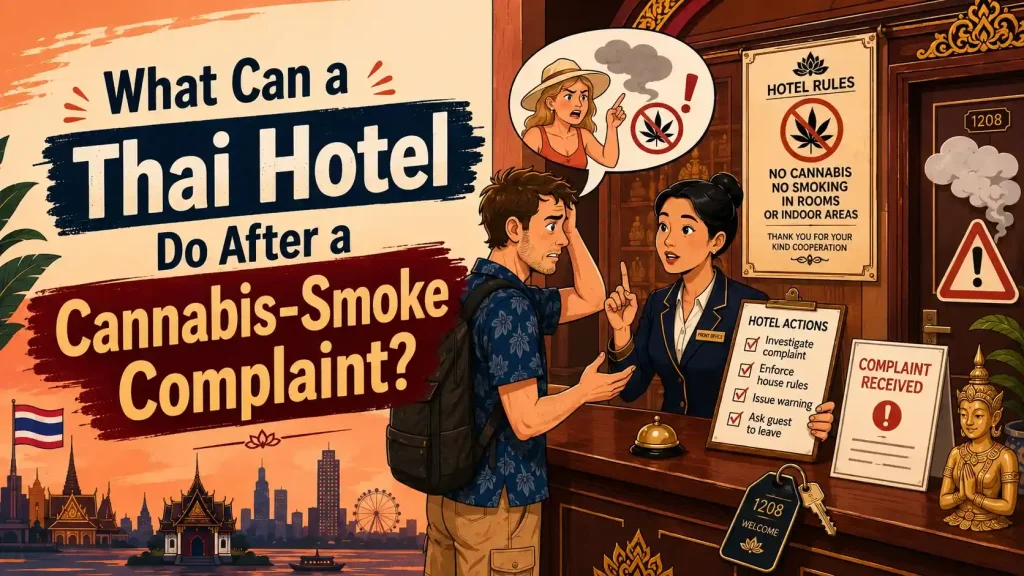
House rules function as binding contract terms that give hotels civil—not criminal—authority to enforce hotel cannabis rules in Thailand, allowing penalties ranging from warnings to immediate eviction based on the specific contract signed at check-in. When you complete registration, you enter a private agreement that treats smoking prohibitions as binding conditions of occupancy, distinct from criminal statutes. This contractual framework means properties possess discretion to handle violations through internal management protocols rather than legal prosecution.
Enforcement severity varies dramatically by property tier and brand policy, creating a landscape where luxury resorts might issue courtesy reminders while budget hostels execute immediate lockouts without universal timelines or standardized cleaning fees. Some establishments embed specific penalties within their booking terms, authorizing immediate eviction and credit card charges for remediation, while others follow progressive disciplinary protocols. The absence of statutory notice requirements means properties determine their own response thresholds based on operational priorities and guest history.
Any monetary demands appearing on your folio represent private liquidated damages or smoking remediation fees, legally distinct from government fines and processed through civil debt mechanisms rather than criminal justice systems. Hotels calculate these charges based on actual cleaning costs, ozone treatment expenses, or predetermined contractual penalties, not statutory fines. You retain the right to dispute these private charges through credit card chargeback processes or civil negotiation, whereas government fines require formal legal proceedings to contest.
When the State Steps In: Police and Public Health Authority Powers
Public health authorities and police may impose criminal penalties of up to 25,000THB and/or three months imprisonment for cannabis smoke that creates a nuisance in hallways, lobbies, balconies, or other public areas, operating entirely independently from hotel management decisions. The Public Health Act targets smoking behaviors that disturb others or contaminate shared spaces, establishing strict liability regardless of the substance’s legal status. These sanctions create criminal records and carry judicial consequences distinct from private hotel penalties.
Police involvement requires evidence of public space violations or documented nuisance, following criminal procedure standards that remain separate from hotel management discretion, and officers may initiate enforcement even when properties prefer quiet resolution. Authorities can act based on direct observation, third-party guest complaints, or surveillance footage without hotel coordination. This creates scenarios where guests face state prosecution despite hotel staff attempting to handle matters internally through warnings or room changes.
Hotels maintain the option to file formal complaints with local authorities, but officers may also respond to independent reports, establishing a dual-track enforcement scenario where guests confront simultaneous hotel sanctions and criminal investigations. The hotel’s contractual authority and the state’s police power function concurrently, meaning payment of a private cleaning fee does not preclude criminal prosecution, and conversely, criminal penalties do not absolve contractual obligations to the property.
Navigating the Crossfire: Guest Response Tactics
Guests must immediately differentiate between negotiable requests from hotel staff regarding contract violations and mandatory compliance orders from police officers to avoid unnecessarily escalating either situation. Hotel employees possess no statutory arrest powers; their authority derives entirely from private contract terms that allow dialogue and potential fee negotiation. Police commands, however, carry the weight of criminal law and require immediate compliance to avoid additional charges such as obstruction or resisting authority.
Documentation of whether financial demands originate from front desk staff as private charges or from public health officers as official fines prevents confusion and accidental double payment for the same incident. Request written itemization specifying whether amounts represent “cleaning fees,” “liquidated damages,” or “government penalties,” as these categories determine your dispute rights and payment obligations. Preserve all receipts and correspondence, as civil charges and criminal fines follow entirely different resolution pathways.
Medical cannabis prescriptions authorized under post-June 2025 regulations permit possession of specified quantities but do not override private property smoking bans, meaning hotels may still evict prescription holders for violating house rules. Your prescription serves as a defense against criminal drug possession charges, not as immunity from contractual obligations or smoking prohibitions on private premises. Properties retain absolute discretion to prohibit combustion regardless of medical authorization, treating prescription holders identically to recreational users regarding indoor smoking violations.
FAQ
Can a hotel legally evict me immediately for smoking cannabis, or do they need to give a warning first?
There is no universal Thai law requiring a warning; eviction timelines depend entirely on the property’s house rules and booking terms encoded in your check-in contract. Luxury establishments may issue courtesy reminders while others change locks within the hour, so reviewing your reservation agreement before smoking remains essential.
Is a ‘cannabis cleaning fee’ on my hotel bill the same as a government fine?
Absolutely not. A hotel cleaning fee constitutes a private contractual penalty for breaking house rules, similar to a landlord charging for carpet damage, while a government fine originates from police or public health officers under the Public Health Act and creates a criminal record. You can dispute private charges through credit card companies, but government fines require legal proceedings to contest.
If I have a medical prescription for cannabis, can the hotel still kick me out for smoking in my room?
Yes. Thailand’s medical cannabis regulations authorize possession with a prescription, but they do not force private businesses to permit smoking on their premises. Your prescription provides a defense against criminal drug charges, not a free pass to violate a hotel’s no-smoking contract terms, allowing properties to evict prescription holders who violate house rules.