Thailand’s Prescription-Only Plot Twist: Where Accidents Actually Happen
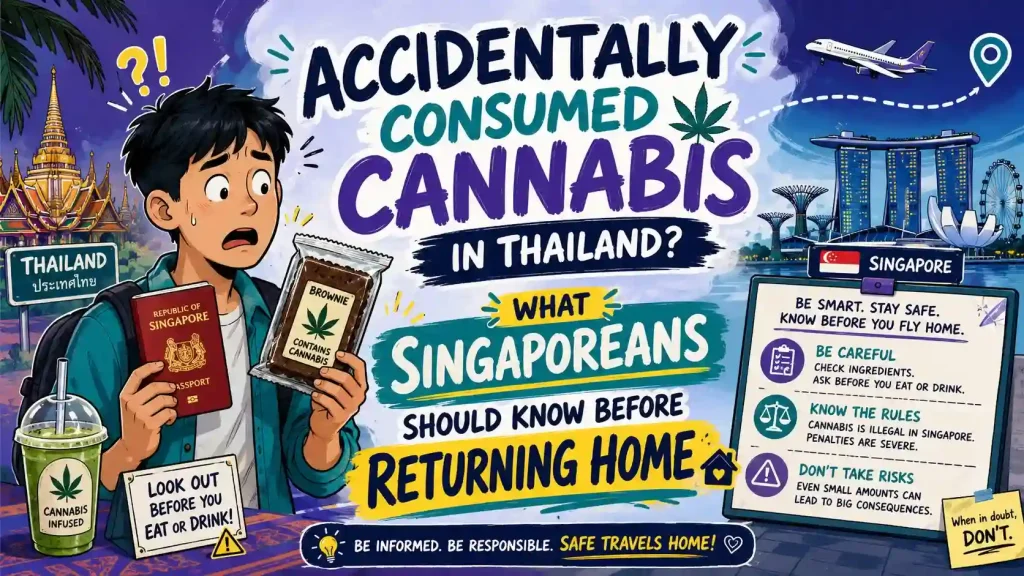
Accidents typically occur in environments where Thailand’s 2025 medical-only regulations fail to prevent unlabeled cannabis products from reaching uninformed tourists. Since June 2025, Thai law has relegated cannabis flower to controlled herb status, requiring a physician’s prescription and limiting purchases to 30g per month through licensed pharmacies. However, enforcement gaps persist in tourist areas where unlabeled edibles circulate at beach parties and night markets, often marketed as “special” brownies or herbal tonics without THC warnings. These products bypass the prescription framework entirely, creating involuntary consumption risks for travelers who mistake them for conventional snacks or beverages.
Secondhand smoke exposure presents another documented vector for accidental ingestion, particularly in enclosed spaces where cannabis smokers ignore public consumption bans. Hotboxed hotel rooms, tour vans, or beach bars can cause non-smokers to absorb THC passively through respiratory exposure, potentially resulting in detectable levels in biological samples upon return to Singapore. The misconception that “legal in Thailand equals safe for Singaporeans” crashes immediately upon landing at Changi Airport; Thailand’s regulatory framework provides no legal forcefield against Singapore’s extraterritorial jurisdiction, which treats your citizenship as a continuous binding contract to domestic drug laws regardless of geographic location or the foreign legal environment you temporarily inhabited.
Reading the CNB’s Mind: Intent Versus Genuine Mistake
CNB investigators evaluate extraterritorial drug cases based on documented evidence of involuntary ingestion rather than retrospective verbal claims of ignorance. Singapore’s legal framework operates on strict extraterritorial principles, meaning the Penal Code and Misuse of Drugs Act follow citizens and permanent residents like a digital shadow across international borders. Investigators scrutinize whether consumption was voluntary or truly involuntary, but they treat unverified claims of accidents with significant skepticism unless supported by contemporaneous medical records, police reports, or physical evidence from the time of the incident.
The evidentiary gap between simply stating “I didn’t know” and proving documented involuntary ingestion is vast under Singapore’s zero-tolerance framework. CNB views deliberate recreational use as categorically distinct from consuming a spiked drink or contaminated food, yet claiming accidental consumption functions strictly as a potential mitigating factor rather than a statutory exemption or automatic legal shield. Depending on the specific circumstances, evidence quality, and your conduct upon discovery, this distinction may influence charging decisions, bail considerations, or sentencing outcomes, but it does not create a legal loophole that guarantees immunity from prosecution under the Misuse of Drugs Act.
The Evidence Folder Strategy: Documenting Without Gaming the System
Building a credible defense requires immediate, legitimate documentation that distinguishes genuine accidents from after-the-fact excuse construction. Seeking medical attention at a Thai hospital upon realizing accidental ingestion creates a timestamped record that establishes a clear timeline, though medical privacy laws mean you control when and how to present this evidence to authorities. This documentation serves dual purposes: addressing potential adverse physical symptoms while creating an independent verification of the incident’s involuntary nature, potentially distinguishing your case from travelers who deliberately consumed cannabis and later fabricated accident narratives.
Preservation of physical evidence significantly strengthens your position with Singaporean investigators who must verify your version of events against potential alternative explanations. Photographs of unlabeled packaging, receipts from the establishment where consumption occurred, contact information of witnesses, and any remaining food or beverage samples provide concrete leads for CNB to trace the source of contamination and corroborate your timeline. Avoid the “detox trap” at all costs; attempting to mask, dilute, or strategically time your return to evade detection destroys your credibility as an innocent party and transforms a potential mitigation argument into evidence of consciousness of guilt, which authorities treat more severely than the original accident itself, potentially leading to enhanced penalties depending on the obstruction circumstances.
FAQ
Can I be prosecuted in Singapore for accidentally eating a cannabis brownie in Thailand?
Yes. Singapore’s extraterritorial jurisdiction applies regardless of intent, meaning you can face charges upon return even for genuinely accidental consumption. However, CNB treats documented accidental ingestion differently from deliberate recreational use—while not an exemption, credible evidence of an accident may influence charging decisions or sentencing outcomes depending on the specific circumstances and documentation quality.
How does CNB determine if my cannabis consumption was truly accidental?
CNB investigators look for contemporaneous documentation rather than retrospective explanations provided upon arrival at Changi Airport. Timestamped medical records from Thai hospitals, police reports filed at the time of the incident, witness statements, and physical evidence of unlabeled products carry significantly more weight than verbal claims made after the fact. Investigators analyze whether your actions immediately following the suspected ingestion—such as seeking medical help or preserving evidence—align with genuine panic versus consciousness of guilt.
What should I do if Singapore authorities request a drug test upon my arrival?
Comply with the test request and remain truthful about the circumstances without volunteering self-incriminating speculation. Present any documentation of the accidental incident, such as medical records or photographs of unlabeled products, through your legal counsel rather than directly to screening officers. Do not attempt to delay the test or provide excuses about timing, as this can be interpreted as obstruction or consciousness of guilt, potentially resulting in more severe legal consequences than the original accidental exposure depending on the obstruction circumstances.