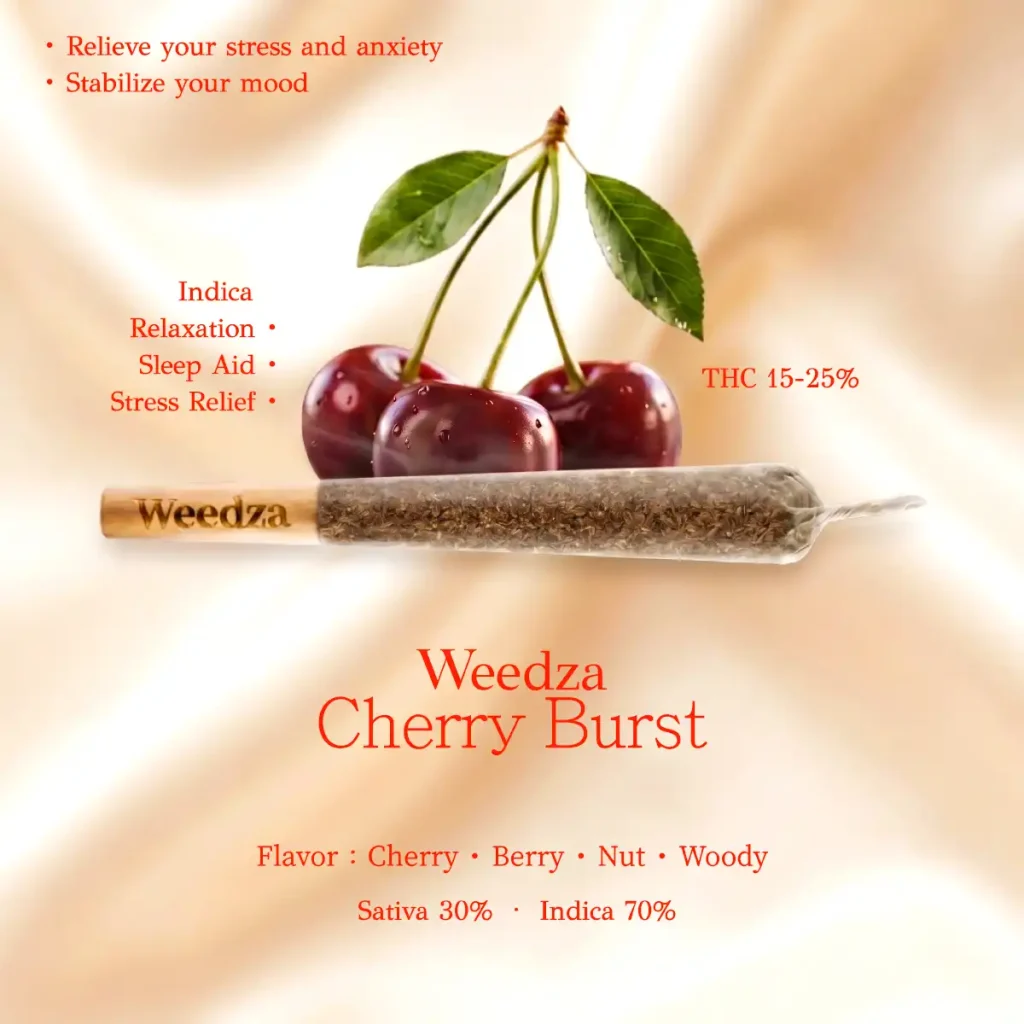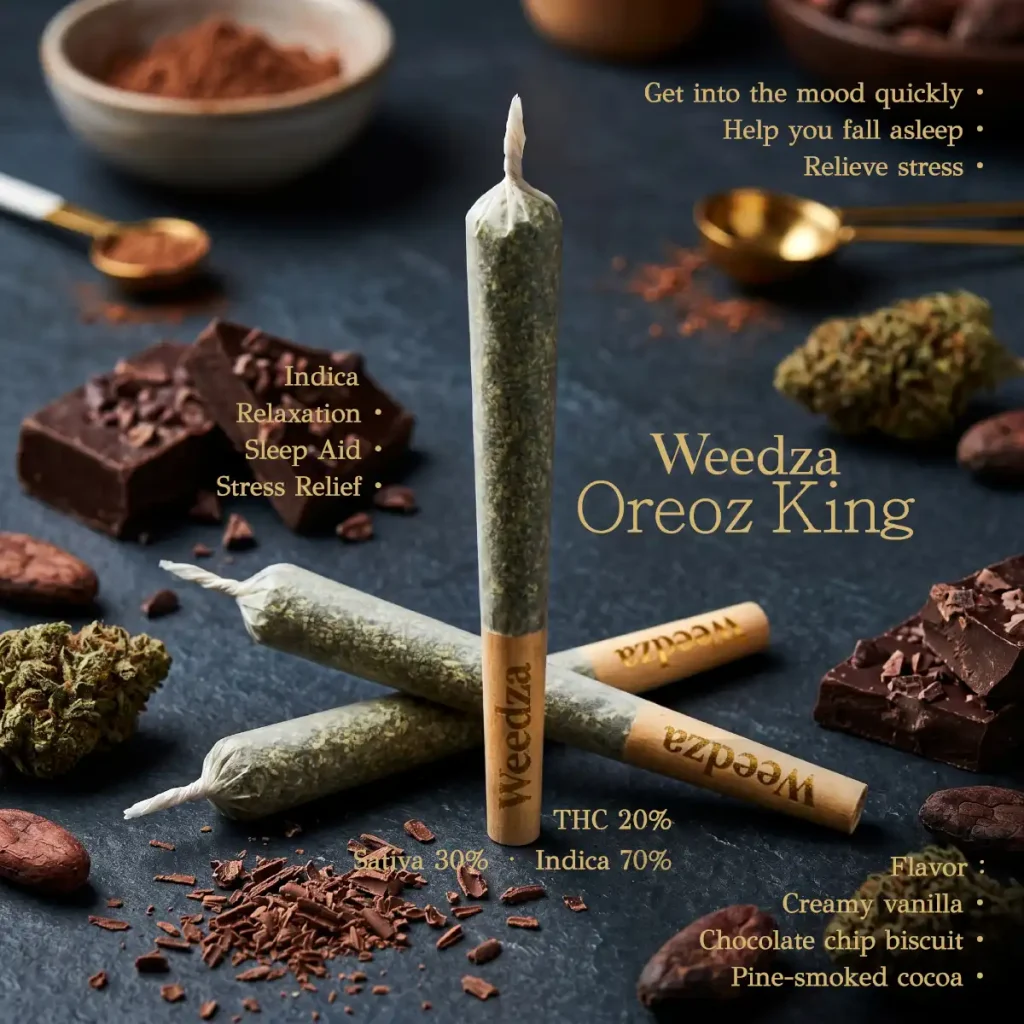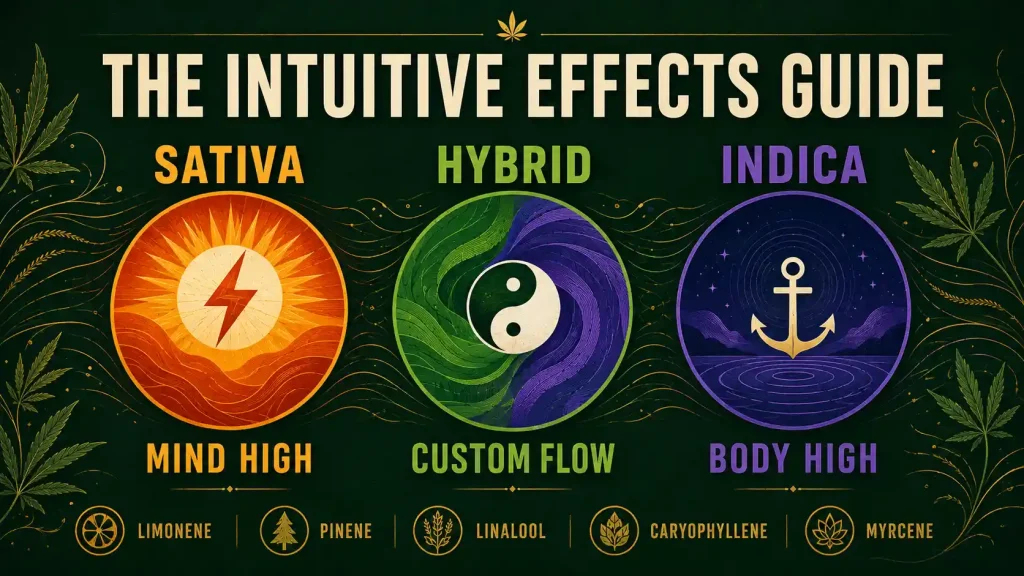
Sativa and indica are useful words for describing cannabis lineages and menu categories, but they are not dependable predictions of how a product will feel. The traditional distinction refers mainly to plant history and physical traits; modern products are frequently crossed, and their chemistry can vary by cultivar, producer and batch. For the wider category overview, see our broader guide to the different types of weed in Thailand.
What is the difference between sativa and indica?
Historically, Cannabis sativa and Cannabis indica were used to describe different cannabis lineages and the traits associated with plants from different environments. Descriptions often mention growth habit, leaf shape and overall structure. Those observations can help explain where the vocabulary came from, but they do not create a clean modern boundary between two predictable experiences.
On menus, the words usually work as shorthand. “Sativa” is often presented as bright, active or uplifting, while “indica” is often presented as calm, heavy or relaxing. A menu category can be useful for orientation, yet it is still a label supplied by a seller or producer—not a standardised medical or chemical classification.
Why the classic effect split is too simple
The energising-versus-relaxing story is repeated so often that it can sound like a rule. It is better treated as a reported pattern or marketing convention. A clinic explainer from Curaleaf notes that these generalisations are incomplete, that labels do not consistently map to THC or CBD, and that cannabinoid and terpene composition may be more informative.
The same label can also be experienced differently by different people. Product chemistry, prior exposure, health context, other medicines, setting and individual sensitivity can all affect an outcome. Cannabis can impair attention, reaction time, memory and coordination; an appealing “energising” or “relaxing” description should never be read as a safety guarantee. The supplied Reddit discussion illustrates this disagreement: some commenters describe a clear personal difference, while others report no reliable distinction. Those accounts are useful for understanding why the vocabulary persists, but they are not controlled evidence.
Where hybrids and modern products fit
Most contemporary commercial products have complex or crossed lineages. A product may be described as indica-dominant, sativa-dominant or hybrid, but those terms do not show exactly which genes, cannabinoids or terpenes are present. Two products carrying the same name can differ because of genetics, growing conditions, harvest, storage, formulation and producer practices.
That is why a binary comparison can mislead. “Hybrid” does not mean a predictable half-and-half effect, and “pure” labels are not a guarantee that a product will behave like a textbook example. Treat the category as a description of how the product is marketed, then look for more specific, current information.
Hybrid weed is a broad menu label commonly used for cannabis described as having mixed breeding lineages. Terms such as “indica-dominant,” “sativa-dominant” and “balanced” are shorthand; unless a producer supplies documented lineage information, they should not be read as exact percentages.
How to read common hybrid labels
| Label used | What it may describe | What it does not establish |
|---|---|---|
| Hybrid | A product presented as having mixed or complex breeding background. | A precise 50/50 ancestry split, measured chemical profile or predictable effect. |
| Indica-dominant or sativa-dominant hybrid | A seller’s or producer’s broad description of the product’s claimed lineage or category. | A verified genetic percentage, potency, medical suitability or how an individual will feel. |
| Balanced hybrid | A general label suggesting neither side is presented as dominant. | A standardised ratio or a guaranteed “middle” effect. |
Research on commercial samples from six US states found that indica, hybrid and sativa labels did not consistently align with measured chemical diversity. That study was not a test of Thai products, and a category name still cannot tell you the verified profile of a particular batch. Read the commercial-sample study.
Want to see which Hybrid products Weedza currently lists? Browse Weedza’s Hybrid product listings. Listings and availability can change; this link is for browsing and does not guarantee stock, price, eligibility or medical suitability.
What to compare instead of the label alone
For an evidence-aware description, separate the name from the product data:
- Cannabinoids: THC, CBD and their stated proportions are measurable categories, although a number still does not predict an individual response.
- Terpenes: aroma compounds can help describe a profile, but they are not a simple effect map. Research on terpene variation in Cannabis sativa found substantial variation within and between plants carrying the same cultivar label.
- Chemotype and batch: a commercial label may correlate imperfectly with observed chemistry. A commercial-cannabis study found that labels did not consistently align with the chemical diversity measured in samples from six US states.
- Producer and documentation: the producer, batch identity and current test information can be more informative than a famous name repeated across different menus.
This is a reading framework, not a shopping or dosing instruction. If a product description gives only “sativa” or “indica” and a promised feeling, it leaves out important uncertainty.
What this means in Thailand’s medical context
In Thailand, a sativa or indica label is not a diagnosis, prescription, indication or legal permission. The current Thai Department of Thai Traditional and Alternative Medicine guidance describes a professional medical-service and PT33 process for controlled cannabis flower, including qualified assessment and record requirements. That administrative pathway is separate from a menu’s marketing language.
Thailand’s Department of Medical Services guidance also frames medical decisions around product composition, patient assessment, risk and monitoring—not around an indica/sativa promise. This article therefore cannot tell you which category is “best,” what to take, or how to treat a condition. For an individual medical question, use a qualified professional and current Thai rules.
FAQ
What is the main difference between sativa and indica?
Historically, the terms described different cannabis lineages and plant traits. In modern commerce, they are often broad labels associated with energising or relaxing stereotypes, but they do not reliably predict an effect.
Are sativa strains energising and indica strains relaxing?
Those are common descriptions, not guarantees. Chemistry, product context and individual response can produce outcomes that do not match the label.
Are most cannabis products hybrids?
Many modern products have crossed or complex lineages, so the binary sativa-versus-indica model often leaves out important overlap. A hybrid label is not a precise effect formula.
Is sativa stronger than indica?
No. “Sativa” and “indica” do not establish potency. Strength depends on the product’s measured composition and other context, and the label alone cannot settle it.
Does an indica or sativa label predict medical effects in Thailand?
No. The label is not a medical indication or prescription. Thai medical decisions belong to the applicable professional and regulatory process, not to a menu category.