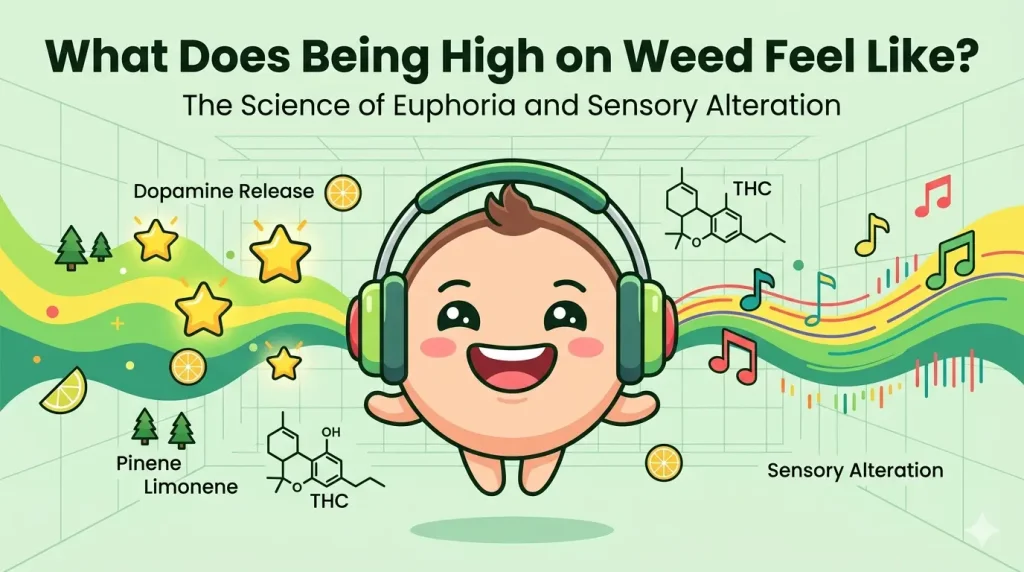
The psychological experience of being high on weed is a complex state of altered consciousness driven by the interaction between THC (Delta-9-Tetrahydrocannabinol) and the brain’s internal signaling networks. In 2026, understanding this journey requires a balance between recognizing the biochemical triggers—such as dopamine release and CB1 receptor binding—and the subjective mental states they produce, including intense euphoria, time dilation, and uncontrollable giggles. This article explores why cannabis lowers your humor threshold, how the liver-metabolized 11-Hydroxy-THC creates a deeper experience in edibles, and how the entourage effect can be harnessed to make your high more creative and trippy. By mastering these psychological and physiological mechanisms, you can safely navigate sensory transitions and ensure that every session is both insightful and pleasurable.
How does THC interact with your brain to create the sensation of being high on weed?
The high on weed sensation is initiated when THC (Delta-9-Tetrahydrocannabinol) binds to CB1 receptors within the endocannabinoid system to disrupt and modulate neural communication. This molecular interaction mimics natural neurotransmitters but acts with significantly more intensity, effectively “unlocking” the brain’s reward and sensory pathways. As of April 2026, researchers have confirmed that this binding process is responsible for the characteristic feelings of relaxation and altered perception that define the recreational cannabis experience.
What role do CB1 receptors play in your sensory perception?
CB1 receptors are the specific protein gateways in the central nervous system that facilitate the psychological shifts in your mental state during a high. When these receptors are occupied by plant-derived cannabinoids, they slow down the brain’s processing of mundane information, which leads to the iconic sensation of music sounding deeper and colors appearing more vibrant. These receptors act as the biological bridge between the chemical compound and your subjective psychological reality.
How does dopamine release trigger immediate euphoria?
Dopamine release is the brain’s internal reward response that occurs almost immediately after the introduction of cannabinoids, creating a surge of happiness and psychological bliss. This chemical surge ensures that ordinary activities, such as eating or socialising, become sources of profound satisfaction. This mechanism is the primary reason why the early stages of a high are often dominated by a sense of overwhelming well-being.
Why does marijuana make you feel slaphappy and cause uncontrollable giggles?
Uncontrollable giggles occur when you are high on weed because THC temporarily suppresses the activity of the prefrontal cortex, the area of the brain responsible for critical evaluation and social inhibition. By “turning off” these mental filters, the high allows you to find intense humor in everyday situations that would normally be ignored, leading to a state often described as being slaphappy. In the current 2026 landscape of social cannabis use, this reduction in inhibition is recognized as a key factor in how the plant fosters social bonding and stress relief.
How does neurotransmitter interference distort your sense of humor?
Neurotransmitter interference “scrambles” the neural pathways that usually filter out trivial data, causing the brain to interpret ordinary thoughts as hilariously absurd or profound. This interference prevents the brain from performing its usual “seriousness check,” which is why simple visual patterns or puns can trigger long fits of laughter. This mirthful state is a direct psychological byproduct of the brain’s inability to maintain its usual critical distance from the environment.
How do specific terpenoids influence your emotional response?
Specific terpenoids act as aromatic modulators that steer your high toward either a giggly, energetic state or a quiet, contemplative one through the entourage effect. For example, Limonene is known to enhance the mood-lifting effects of the high, making you more prone to laughter and social engagement. Understanding these terpene profiles allows you to customize your psychological experience based on your current social goals.
Why do cannabis edibles produce a different psychological high compared to smoking?
The psychological high from edibles differs from smoking because the liver metabolizes the compound into 11-Hydroxy-THC, a potent metabolite that provides a much deeper and more immersive sensory experience. This metabolite crosses the blood-brain barrier with higher efficiency than standard Delta-9, leading to what many describe as a more “trippy” or “body-heavy” journey. In 2026, edibles are favored by those seeking long-lasting psychological exploration, as the effects can persist for up to eight to twelve hours.
What is the impact of first-pass metabolism on your mental state?
First-pass metabolism is the biological process where the liver chemically transforms cannabinoids before they reach the brain, converting them into the powerful 11-Hydroxy-THC. This metabolic step is responsible for the delayed onset of edibles—often taking up to 120 minutes—but results in a significantly more powerful psychological impact once the effect “blooms.” This process changes the quality of the high from a quick “head buzz” to a deep, full-body psychological odyssey.
Why is the body high more intense with oral ingestion?
The body high is more intense with oral ingestion because the metabolized cannabinoids distribute more evenly through the body’s tissues and the central nervous system. These physical sensations of weightlessness or deep relaxation are a direct psychological reaction to the steady supply of potent metabolites reaching the brain’s sensory control centers. This results in a “grounded” feeling that provides a different kind of psychological comfort compared to inhalation.
How can you make your high on weed more trippy and creative?
How to make your high more trippy involves utilizing the entourage effect, where full-spectrum cannabinoids and terpenes work together to sharpen and deepen your sensory perception. Instead of focusing solely on pure THC, 2026 consumers look for product profiles that preserve the plant’s natural complexity to unlock a multi-dimensional psychological state. By pairing the high with immersive activities like music or art, you can foster a state of deep creative flow.
| Enhancement Strategy | Key Biological Mechanism | Expected Psychological Outcome |
|---|---|---|
| Full-Spectrum Pairing | Entourage Effect | Heightened visual vibrance and auditory layers |
| Terpene Calibration | Aromatic Modulation | Specific mood steering (e.g., happiness or focus) |
| Set and Setting | Psychological Priming | Reduced anxiety and vivid daydreaming |
How do terpenes sharpen your vision and musical appreciation?
Terpenes act as sensory catalysts that increase the brain’s sensitivity to color and sound frequency during the high. When specific aromatic compounds are present, they can make music sound as if it has a physical presence or make colors appear to have an internal glow. This sharpening of the senses is a hallmark of the “trippy” experience that many creative consumers seek out for inspiration.
Why is set and setting the foundation of an immersive trip?
Set and setting are the foundation of a good high because your internal mindset and your external environment act as the primary filters through which you interpret the high. A safe, comfortable space combined with a positive, curious mindset ensures that your brain interprets intense sensory shifts as fun and enlightening rather than threatening. Mastering these variables is now considered more essential than product potency for achieving a quality high in 2026.
What is a green out and how do you recover from intense overstimulation?
A green out is a state of acute THC overstimulation where the psychological high becomes overwhelming, resulting in symptoms like paranoia, rapid heart rate, and dizziness. This state occurs when the brain’s receptors are flooded beyond the user’s current tolerance level, causing sensory enhancements to feel intrusive and frightening. Understanding that this is a temporary chemical imbalance is the first step toward regaining control during an intense experience.
How can CBD be used to “dampen” an overwhelming high?
CBD (Cannabidiol) acts as a receptor modulator that can “dampen” the intensity of an overwhelming high by competing with THC for space on brain receptors. By introducing a high dose of CBD during a green out, you can effectively lower the psychoactive “volume” and significantly reduce feelings of anxiety. This is the most effective biological “off-switch” available for managing accidental overconsumption in 2026.
What are the best grounding techniques to recover from sensory overstimulation?
The best grounding techniques to recover from sensory overstimulation include moving to a quiet, dimly lit space and focusing on slow, rhythmic breathing to calm the nervous system. These actions signal to the brain that there is no immediate threat, allowing the intensity of the high to fade into a more manageable state. Additionally, physical anchors like drinking water or chewing on black pepper—which contains grounding terpenes—can help pull the mind back to reality.
FAQ
If you use marijuana, what does your high feel like?
Being high on weed generally feels like a state of relaxed euphoria where your senses are sharpened and your thoughts flow with more creative freedom. Many users report a feeling of “weightlessness” in the body and a significant increase in the appreciation of music and humor, making the world seem more interesting and vibrant.
What happens to your brain if you stay high on weed constantly?
Staying high on weed constantly can lead to psychological dependence and a desensitization of your endocannabinoid receptors, meaning you will require higher doses to feel the same effects. Long-term heavy use is associated with potential temporary impairments in short-term memory and a decrease in the natural intensity of daily emotions.
What does the first time being high on marijuana feel like?
The first time being high on marijuana is often a mix of intense sensory surprise and uncontrollable laughter as the brain encounters THC for the first time. Some people may feel a heavy body sensation or a sudden shift in time awareness, while others may need a few sessions before their brain fully learns to recognize the altered state.
Which type of marijuana produces the most pleasurable and euphoric high?
The most pleasurable high is typically produced by full-spectrum strains that balance a moderate THC content with a rich profile of mood-elevating terpenoids like Limonene. In 2026, the focus has shifted toward finding specific “Chemovars” that align with your personal biology to ensure a consistently happy and sociable euphoria.
Does being high on weed make you feel sleepy or tired?
Being high on weed can definitely make you feel sleepy, especially during the “burn out” phase as the initial dopamine rush fades. Strains high in the terpene Myrcene are specifically known for their sedative properties, which can lead to a deep state of physical relaxation and a strong desire to rest after the peak of the high.
Will you feel the psychological effects of weed immediately after consumption?
You will feel the effects almost immediately (within seconds to minutes) when smoking or vaping, but the experience is significantly delayed when using edibles. When eating cannabis, the psychological journey often takes 60 to 120 minutes to begin, but it results in a much more powerful and longer-lasting experience due to the production of potent metabolites.
References
- Health effects of cannabis (Canada.ca)
- If you use marijuana, what does your high feel like? : r/AutismInWomen (Reddit)
- Marijuana high: Strains, smoking, vaping, and edibles (Medical News Today)
- Marijuana: What Happens During a Body High? | Oxford (Oxford Treatment Center)
- Signs & Side Effects of Weed Use (How to Tell If Someone is High) (American Addiction Centers)
- What Does It Feel Like to Be High on Marijuana? Smoking and Vaping (Healthline)