The rapid evolution of Thailand’s cannabis landscape has left many travelers and locals confused about the actual science behind the plant. As of March 2026, the market has shifted from recreational freedom toward a strictly regulated medical framework, making it vital to understand the cbd meaning beyond the marketing hype. This comprehensive guide serves as your essential encyclopedia, breaking down the chemical differences in the thc vs cbd debate, the botanical origins of cannabidiol, and the therapeutic potential for chronic health conditions. We also provide a critical survival guide for navigating Thailand’s current laws, ensuring you can enjoy the benefits of CBD safely, legally, and effectively during your visit. Whether you are seeking relief from anxiety or managing chronic pain, this article clarifies everything you need to know about modern cannabis in the Land of Smiles.
Why has cannabidiol become the biggest wellness trend for tourists visiting Thailand today
Welcome to Thailand, where the “green revolution” has undergone a sophisticated transformation. When I first wandered through the bustling streets of Sukhumvit a few years ago, cannabis leaves were displayed on every corner with little oversight. However, as we stand in March 2026, the vibe has matured significantly. The “wild west” era is over, replaced by a focused, medical-first approach that prioritizes consumer safety and scientific application. Today, the conversation isn’t about getting “high” on the beach; it’s about how cannabidiol—better known as CBD—can enhance your quality of life.
Understanding the true cbd meaning and its applications in modern medicine
To truly grasp the current trend, we must look at the cbd meaning within a clinical context. CBD is one of over a hundred cannabinoids found in the cannabis plant, but unlike its famous cousin THC, it is non-intoxicating. For the modern traveler, this means you can address the physical toll of a 12-hour flight—such as joint stiffness and jet lag—without losing your mental clarity. In Thai wellness centers, CBD is now treated as a high-end supplement, often infused into spa treatments and recovery oils to help visitors find their “Sanuk” (joy) without the fog of intoxication.
Exploring the significant shift toward medical cannabis use in early 2026
The shift in early 2026 isn’t just cultural; it’s a legal reality. The Thai government has tightened regulations to ensure that cannabis remains a tool for health rather than just a recreational pastime. For you, the visitor, this means the products you find in reputable licensed clinics are now subject to much higher quality standards than in previous years. We are seeing a move toward precision—where dosages are measured in milligrams and products are tailored to specific needs like sleep, focus, or pain management. This evolution ensures that Thailand remains a global leader in medical cannabis while protecting the “Land of Smiles” reputation for safety and hospitality.
What are the primary differences in the debate of thc vs cbd for your health
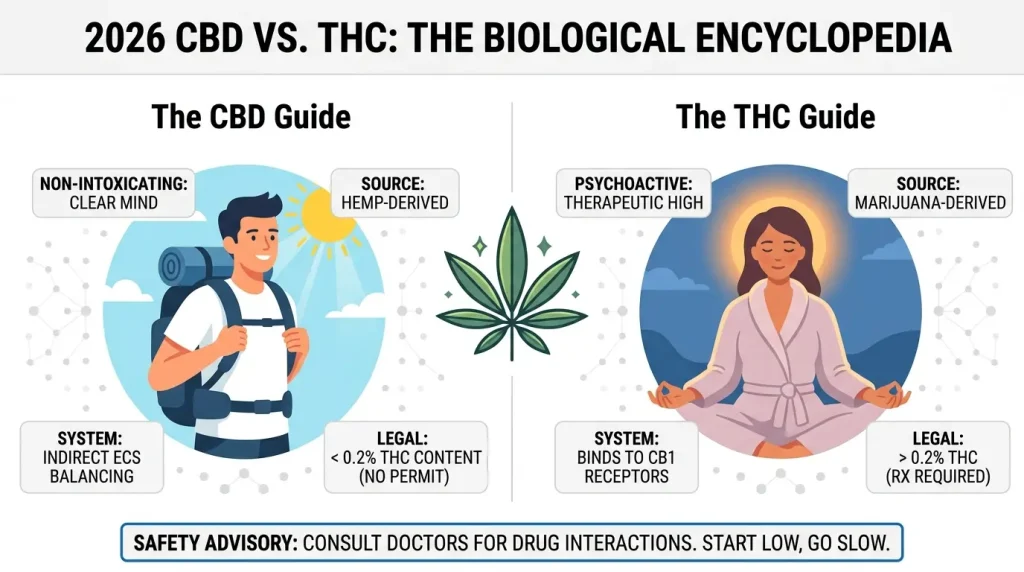
Whenever I sit down with someone curious about cannabis, the conversation inevitably turns to the thc vs cbd debate. It’s the most common source of confusion I encounter. From a scientific perspective, these two compounds are like fraternal twins. They share the exact same molecular formula—21 carbon atoms, 30 hydrogen atoms, and 2 oxygen atoms. However, their physical structure differs slightly, which completely changes how they interact with your body. Think of them as two different keys trying to fit into the same lock; one opens the door to a psychedelic experience, while the other simply repairs the hinges.
How these chemical compounds interact with your internal endocannabinoid system
Your body contains a complex cell-signaling system called the Endocannabinoid System (ECS), which regulates everything from sleep and mood to appetite and pain. THC is a “direct” player; it binds tightly to the CB1 receptors located primarily in your brain and central nervous system. This direct binding is what triggers the release of dopamine and creates the famous euphoric “high.” CBD, conversely, is a “modulator.” It doesn’t bind directly to CB1 or CB2 receptors. Instead, it acts like a technician, fine-tuning how the receptors respond to your body’s own natural cannabinoids, helping to bring your system back into a state of balance, or homeostasis.
Why cbd does not produce the high associated with thc
Because CBD does not bind to the CB1 receptors in the brain, it is physically impossible for it to make you feel “stoned.” In fact, scientific literature suggests that CBD can actually act as a “buffer” for THC. If you’ve ever felt too anxious or paranoid after using a high-THC product, CBD can step in to neutralize those negative effects by blocking THC from binding so aggressively to those receptors.
| Feature | CBD (Cannabidiol) | THC (Tetrahydrocannabinol) |
|---|---|---|
| Psychoactivity | Non-intoxicating (No High) | Psychoactive (Produces a High) |
| ECS Interaction | Indirectly modulates receptors | Binds directly to CB1 receptors |
| Common Use | Anxiety, Pain, Inflammation | Nausea, Appetite, Glaucoma |
| 2026 Thai Legal Status | Legal (THC < 0.2%) | Medical Prescription Required |
This distinction is the “holy grail” of cannabis knowledge: CBD offers the therapeutic benefits of the plant without the cognitive impairment, making it the perfect companion for a day of exploring Bangkok’s temples.
Do you know if your cbd products come from industrial hemp or marijuana plants
If you’re buying a bottle of oil in a boutique shop in Chiang Mai, do you know where it actually came from? The botanical source of your cannabidiol is just as important as the chemical structure. In the industry, we use the terms “Hemp” and “Marijuana” to categorize the cannabis plant, but these are actually legal and cultural terms rather than purely botanical ones. Understanding this distinction is vital for your legal safety in Thailand, where the law draws a very sharp line between the two.
Distinguishing industrial hemp plants from their high thc marijuana relatives
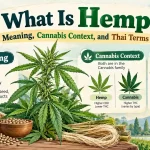
Think of the cannabis plant like the citrus family. Just as a lemon and an orange are both citrus but have vastly different flavors and uses, Hemp and Marijuana are both varieties of Cannabis sativa. Industrial Hemp is the “sober” variety, specifically bred for its strong fibers, nutritious seeds, and high CBD content. Legally, hemp is defined as cannabis that contains a very low concentration of THC. While the US standard is 0.3%, here in Thailand, the threshold for CBD extracts is strictly 0.2% THC by weight. Marijuana, on the other hand, is the variety bred for its resinous flowers and high THC levels, intended for medical or recreational use.
Why botanical plant sources matter for your legal and safety reasons
In my experience visiting local Thai farms, the push in 2026 has been toward “certified hemp” cultivation. Why does this matter to you? Because CBD derived from marijuana plants may contain trace amounts of THC that exceed the legal 0.2% limit, which could land you in legal trouble or cause an accidental positive on a drug test. By ensuring your product is “Hemp-derived,” you are choosing a product that is naturally low in THC, making it safer for daily use and more likely to comply with the strict regulations enforced by the Thai FDA. Always look for the source on the label; “Industrial Hemp” is your green light for a stress-free experience.
Which scientific breakthroughs prove the medical potential of cannabidiol for treating chronic conditions
The most exciting part of my job as an SEO writer in the health space is watching “stoner myths” transform into hard, peer-reviewed science. Cannabidiol is no longer just a trendy buzzword; it is a legitimate pharmacological tool. The World Health Organization has explicitly stated that CBD is generally well-tolerated and does not exhibit potential for abuse or dependence. This has paved the way for massive scientific breakthroughs that are changing lives right now, particularly for those who have found little relief in traditional Western medicine.
Using medical cbd to manage pediatric epilepsy and complex neurological issues
The most powerful evidence for CBD’s medical efficacy is the FDA-approved drug Epidiolex. This is a highly purified CBD oil used to treat rare and severe forms of childhood epilepsy, such as Dravet syndrome and Lennox-Gastaut syndrome. In clinical trials, CBD significantly reduced the frequency of seizures in children who were previously unresponsive to other treatments. Beyond epilepsy, neurologists are now exploring CBD’s potential in managing symptoms of Multiple Sclerosis and Parkinson’s disease, where its neuroprotective properties help reduce muscle spasticity and improve motor function.
Achieving better results through the synergy of the entourage effect
However, the real “magic” happens when we stop looking at CBD in isolation. Scientists have discovered a phenomenon called the “Entourage Effect.” This theory suggests that the various compounds in the cannabis plant—cannabinoids like CBD and THC, plus aromatic compounds called terpenes—work better together than they do alone. For example, a “Full Spectrum” CBD oil (which contains a tiny, legal amount of THC and other plant compounds) is often found to be more effective for chronic pain than pure CBD isolate. It’s like a musical orchestra; while the violin (CBD) is beautiful alone, the full symphony provides a much deeper and more resonant experience. When you choose a product in Thailand, understanding this synergy can help you find a more effective solution for your specific health needs.
Are you aware of the potential side effects and dangerous drug interactions of cbd
Despite its reputation as a “miracle plant,” I always remind my readers that CBD is a pharmacologically active compound. Just because it’s “natural” doesn’t mean it’s entirely risk-free. If you are planning to incorporate CBD into your daily routine while traveling through Thailand, you must treat it with the same respect you would any other supplement. Being informed about how your body might react is the key to a safe and enjoyable trip.
Identifying common side effects like fatigue and potential digestive issues
Most people tolerate CBD very well, but “most” isn’t “all.” In my years of research and talking to users, the most frequently reported side effects are lethargy and changes in appetite. Some people find that taking a high dose of CBD oil on an empty stomach can lead to a bout of diarrhea or nausea. This is usually just your body’s way of saying the dosage was a bit too high. I always recommend the “start low and go slow” approach—begin with a tiny dose and gradually increase it until you find your “sweet spot.”
Avoiding the grapefruit effect when mixing cbd with medications
The most critical safety warning involves your liver. CBD is metabolized by a family of enzymes called Cytochrome P450. These are the same enzymes responsible for breaking down about 60% of all pharmaceutical drugs. This creates what scientists call the “Grapefruit Effect.” If you take CBD alongside medications like blood thinners (Warfarin), heart medicine, or certain antidepressants, the CBD can “distract” your liver enzymes. This causes the levels of your other medications to rise dangerously high in your bloodstream because they aren’t being broken down at the usual rate. If you are on any long-term medication, please do not start a CBD regimen without consulting a medical professional. Safety isn’t just about avoiding a “bad trip”; it’s about ensuring your body can handle the combination of substances safely.
How can tourists stay legally safe while navigating the strict cannabis laws in Thailand
Navigating the legal landscape in Thailand as of March 2026 requires your full attention. The days of the “anything goes” recreational boom are officially behind us. The Thai government has enacted a strict “Medical Use Only” policy to protect public health and maintain order. As a tourist, you are welcome to benefit from the plant, but you must follow the rules to the letter. Ignorance of the law is not an excuse, and the penalties for non-compliance are now quite severe.
Securing a valid medical prescription to possess legal cannabis flower
If you wish to possess or use cannabis flower (which typically has a high THC content), you must obtain a valid medical prescription from a Thai-licensed physician. You cannot simply walk into a shop and buy a joint based on your own self-diagnosis. Most reputable clinics in Bangkok or Phuket have doctors on-site who can evaluate you and issue a legal permit if they deem it necessary for your condition (such as chronic pain or insomnia). This prescription is typically valid for 30 days, and you must carry a digital or physical copy of it at all times when you are in possession of the flower.
Avoiding heavy fines for public consumption and illegal possession
The most important rule for tourists: Never smoke in public. Public consumption of cannabis is strictly prohibited and carries a fine of up to 25,000 Thai Baht or 3 months in jail. Furthermore, if you are caught with cannabis flower and do not have a valid medical prescription, you face up to 1 year of imprisonment and a fine of 20,000 Baht. CBD products, such as oils and topicals, are generally legal to purchase if they contain less than 0.2% THC, but even then, they must be registered with the Thai FDA. To stay safe, only purchase from licensed clinics and always keep your receipts. Remember, the law is designed to facilitate medical healing, not public intoxication. Always check the latest updates from the Thai Ministry of Public Health to ensure you are compliant with the most recent regulations.
What steps should you take to find high quality cbd oil in a crowded market
With the explosion of the CBD market in Thailand, the “snake oil” problem has unfortunately grown as well. I’ve seen everything from generic cough syrup relabeled as “Premium CBD” to products contaminated with heavy metals from poor soil. In a market as vibrant but sometimes unregulated as this, you have to be a skeptical and smart consumer. Finding a high-quality product is about looking past the beautiful packaging and focusing on the cold, hard data.
Verifying product purity through official third party lab reports
The gold standard for any CBD product is the Certificate of Analysis (COA). This is a document from an independent, third-party laboratory that verifies exactly what is—and isn’t—inside that bottle. A proper COA will confirm the concentration of cannabidiol and ensure the THC level is below the legal 0.2% limit. More importantly, it tests for “the bad stuff” like pesticides, mold, and heavy metals. If a shop or vendor cannot provide a COA for their batch, you should walk away immediately. Your health is too important to gamble on a mystery liquid.
Spotting common scams and mislabeled products in local shops
Be wary of products that make “miracle” claims, like “cures cancer” or “erases COVID-19.” These are major red flags. Reputable brands focus on wellness and symptom management rather than impossible cures. Also, watch out for “hemp seed oil” being sold as “CBD oil.” While hemp seed oil is a great moisturizer and salad dressing, it contains zero CBD. Always look for terms like “Full Spectrum,” “Broad Spectrum,” or “CBD Isolate” on the label, and ensure the milligram dosage is clearly stated. By sticking to licensed medical clinics and wellness centers, you drastically increase your chances of finding a product that is both effective and safe for your journey through Thailand.
FAQ
Do I want CBD or THC?
Choosing between the two depends entirely on your health goals and legal comfort. If you are looking for relief from anxiety, inflammation, or daily stress while maintaining a clear head and staying within the general ‘over-the-counter’ legal limit, CBD is the way to go. If you are suffering from severe chronic pain, debilitating nausea, or extreme insomnia, and you are willing to go through the process of getting a Thai medical prescription, a product with THC might be more effective for your needs.
Is it better to have CBD or THC?
Neither compound is inherently ‘better’; they simply have different jobs. However, science increasingly points toward the ‘Entourage Effect,’ meaning that for most chronic conditions, a combination of both compounds (even in small, legal amounts) tends to provide more comprehensive relief than using one in isolation. For a casual traveler looking for wellness, CBD is usually the ‘better’ starting point because it doesn’t interfere with your daily activities or mental state.
Is it THC or CBD that gets you stoned?
THC is the only compound in the cannabis plant that is psychoactive and responsible for the ‘stoned’ or ‘high’ feeling. CBD is non-intoxicating and will not change your perception of reality, no matter how much you consume.
Is it bad to use CBD every day?
For the vast majority of people, using CBD daily is not only safe but actually more effective, as it allows the compound to build up in your system and maintain balance within your Endocannabinoid System. However, if you plan on long-term daily use, it is wise to monitor your liver health through routine check-ups and ensure it doesn’t interfere with any other medications you might be taking.
Will 0.3 THC get you high?
Generally speaking, no. A trace amount of 0.3% THC (or the Thai legal limit of 0.2%) is not enough to produce a psychoactive effect in an adult. These tiny amounts are present in ‘Full Spectrum’ products to enhance the healing power of the CBD, not to cause intoxication. However, if you are extremely sensitive or undergo a very rigorous drug test, even these trace amounts could potentially be detected.
References
- CBD vs. THC: What’s the Difference? (WebMD)
- CBD vs. THC: Understanding the Differences and Benefits (Premier Neurology & Wellness Center)
- Cannabidiol (CBD): What we know and what we don’t (Harvard Health Publishing)
- ELI5: What are the differences between hemp, CBD, THC, etc? (Reddit)
- THC and CBD: Similarities and differences between siblings (PMC)
- CBD vs. THC: What’s the Difference? (Healthline)